Packaging & Waste Policy
Purpose and scope
This policy explains how Primavera Coffee B.V. approaches the EU's new packaging rules for the green coffee we ship to roasters in the European Union, and what that means for our customers. It covers the two types of packaging we use for green coffee:
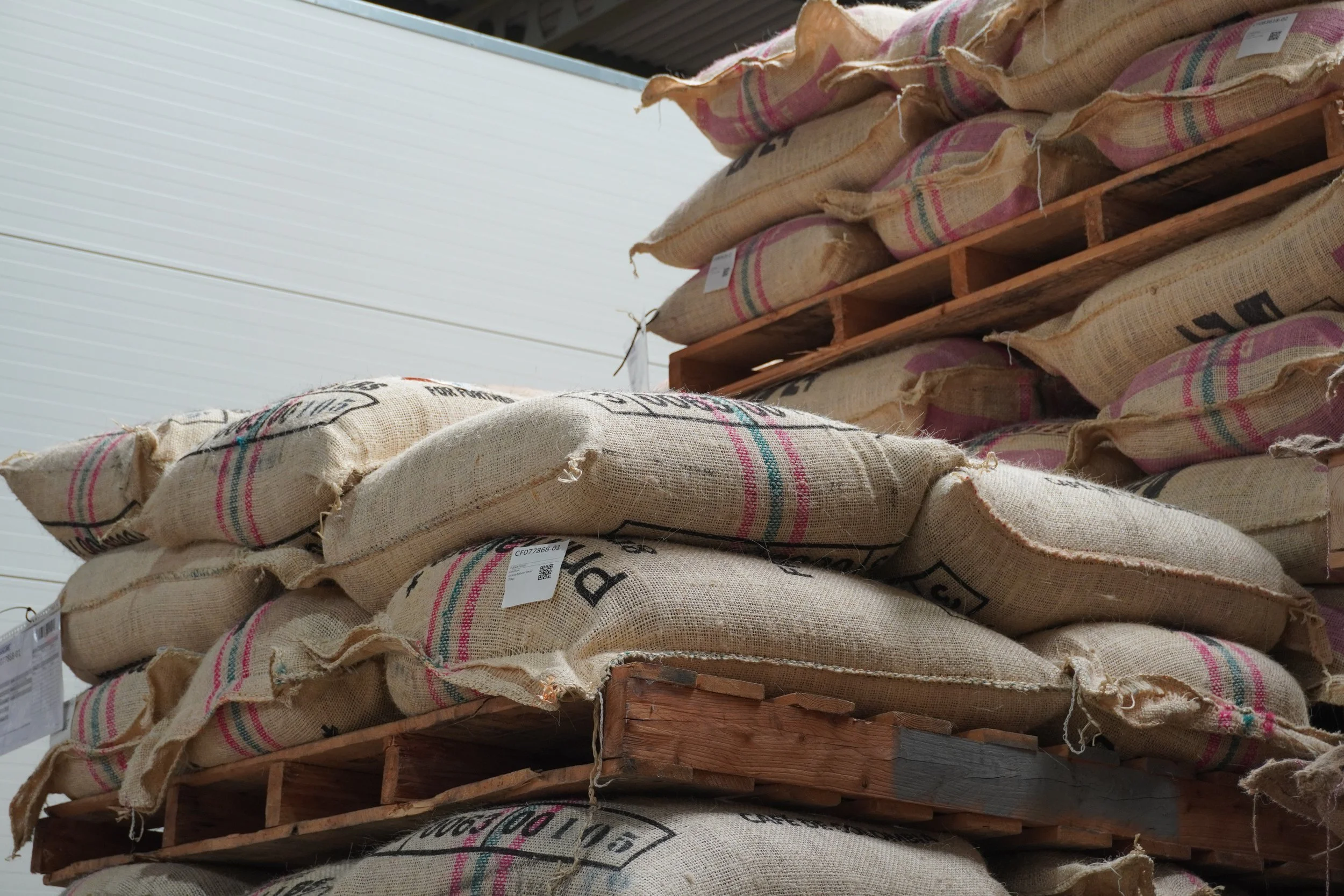
Jute bags, the traditional natural-fibre sacks used to transport and store green coffee.
Ecotact hermetic bags, the multilayer high-barrier bags (liners and small-lot bags) that protect coffee from oxygen, moisture and temperature change during storage and transport.
This policy applies to green coffee sold by Primavera Coffee B.V. to customers in EU Member States, including SPOT, forward-contracted and direct-from-origin shipments.
The EU rules in brief
The Packaging and Packaging Waste Regulation (EU) 2025/40, known as the PPWR, replaces the 1994 Packaging Directive. It entered into force on 11 February 2025 and applies from 12 August 2026. Because it is a regulation, it applies directly and in the same way in every Member State.
The PPWR covers all packaging and packaging waste, regardless of material or origin, across the whole life cycle: eco-design, recycled content, waste prevention, reuse, and collection and recycling. Its stated aims include:
making all packaging on the EU market recyclable in an economically viable way by 2030;
safely increasing the use of recycled plastics in packaging;
reducing the use of virgin materials, in support of climate neutrality by 2050;
reducing substances of concern, including restricting PFAS in food-contact packaging above set thresholds; and
harmonising rules across Member States.
More detailed requirements are being introduced step by step through guidance and secondary legislation. We follow these developments and will update this policy as they take effect.
Our packaging
| Jute bags | Ecotact hermetic bags | |
|---|---|---|
| Material | Natural plant fibre (jute) | Multilayer plastic high-barrier film |
| Role | Outer sack for handling, stacking and transport | Inner protection against oxygen, moisture and temperature variation |
| Typical formats | 69/70 kg sacks and 35 kg sacks | Liners for 69/70 kg sacks; 35 kg sacks |
| Reuse potential | High: commonly reused for storage, handling and upcycling | High: rated for 3 reuses over a 3–5 year lifespan. Reusable for storage and handling, including transparent film that supports recycling |
| End of life | Reuse first; then natural-fibre or textile collection, or composting where accepted locally | Reuse first; then return via the Ecotact recycling programme or local plastic film collection where available |
Ecotact states that its bags are recyclable and reusable and are covered by its packaging collection and recycling programme. Jute and Ecotact bags are often used together, with the hermetic bag placed inside the jute sack.
Our commitments
Compliance. We work to ensure the packaging we place on the EU market meets the PPWR requirements that apply to our role in the supply chain.
Safe materials. We obtain from our packaging suppliers a written confirmation that the jute bags and Ecotact bags meet applicable limits on substances of concern, including heavy metals and PFAS, and are suitable for food contact.
Packaging that works, and no more of it. We use packaging to protect coffee quality and avoid loss. We do not add packaging layers that serve no protective purpose.
Reuse before recycling. We encourage customers to reuse jute and Ecotact bags wherever possible, and we will share reuse ideas and local recycling options on request.
Transparency. We will provide packaging documentation on request (see Section 7) and inform customers promptly if our packaging changes.
Continuous improvement. We review our packaging against the PPWR's recyclability and recycled-content direction, and work with suppliers on improvements ahead of the 2030 recyclability goal.
What this means for our customers
Your obligations under the PPWR depend on your role (for example importer, distributor, coffee roaster or Coffee shop) and on the Member State where you operate. National registration and role-specific responsibility schemes can differ between countries.
In practice, we recommend that customers:
check with their national competent authority or producer-responsibility organisation which obligations apply to them;
keep the packaging documentation we provide with their compliance records;
tell us if they need specific labelling, documentation or take-back arrangements for their market; and
sort and dispose of our packaging as described in Section 6.
The European Commission has also proposed, in its December 2025 Environmental Omnibus, to suspend the obligation for producers to appoint an authorised representative when selling packaged products directly to consumers in another Member State. This proposal is still under examination by the European Parliament and the Council, and we will update customers if it changes anything for them.
Handling and end-of-life guidance
Jute bags
Reuse first: storage, sample handling, transport, gardening, or upcycled products.
Empty the bag completely and remove plastic ties, tags and stickers before disposal.
At end of life, use natural-fibre or textile collection where available, or compost where local rules allow.
Do not burn jute bags or dispose of them in plastic recycling.
Ecotact hermetic bags
Reuse first: the bags are reusable for storing green coffee or other dry goods.
Empty the bag completely and keep it clean and dry. Remove zippers, closures or labels if your collection scheme asks for it.
Recycle through the Ecotact recycling programme where it is available to you (customers order a recycling box, fill it with used bags and return it with the prepaid label - confirm availability for each EU market) or through your local plastic film collection.
Do not place the bags in paper, glass or general waste where a separate collection for plastic film exists.
Recycling rules differ by Member State. Please follow local guidance where it differs from the above.
Documentation available on request
On request, we can provide, where available from our suppliers:
material specifications for jute bags and Ecotact bags;
information about Ecotact's recycling programme and collection options; and
relevant declarations or conformity information required for your market.
Sources
European Commission, Packaging waste: https://environment.ec.europa.eu/topics/waste-and-recycling/packaging-waste_en
Regulation (EU) 2025/40 on packaging and packaging waste (EUR-Lex)
Ecotact, Penta Pak 12.5 product information and recycling programme
Primavera Green Coffee: https://www.primavera.coffee
This policy is for general information and does not constitute legal advice. Customers should seek their own advice on their obligations under EU and national law.